

Quick answer
The tromso orca watching season runs roughly from late October to late January, peaking in November and December when herring mass in the fjords near Skjervøy. Shore viewing is free at 0 NOK; boat tour prices vary by operator. The recommended arrival window is 08:00–14:00, which covers the usable light during the polar night. Herring routes shift between years, so no month guarantees sightings.
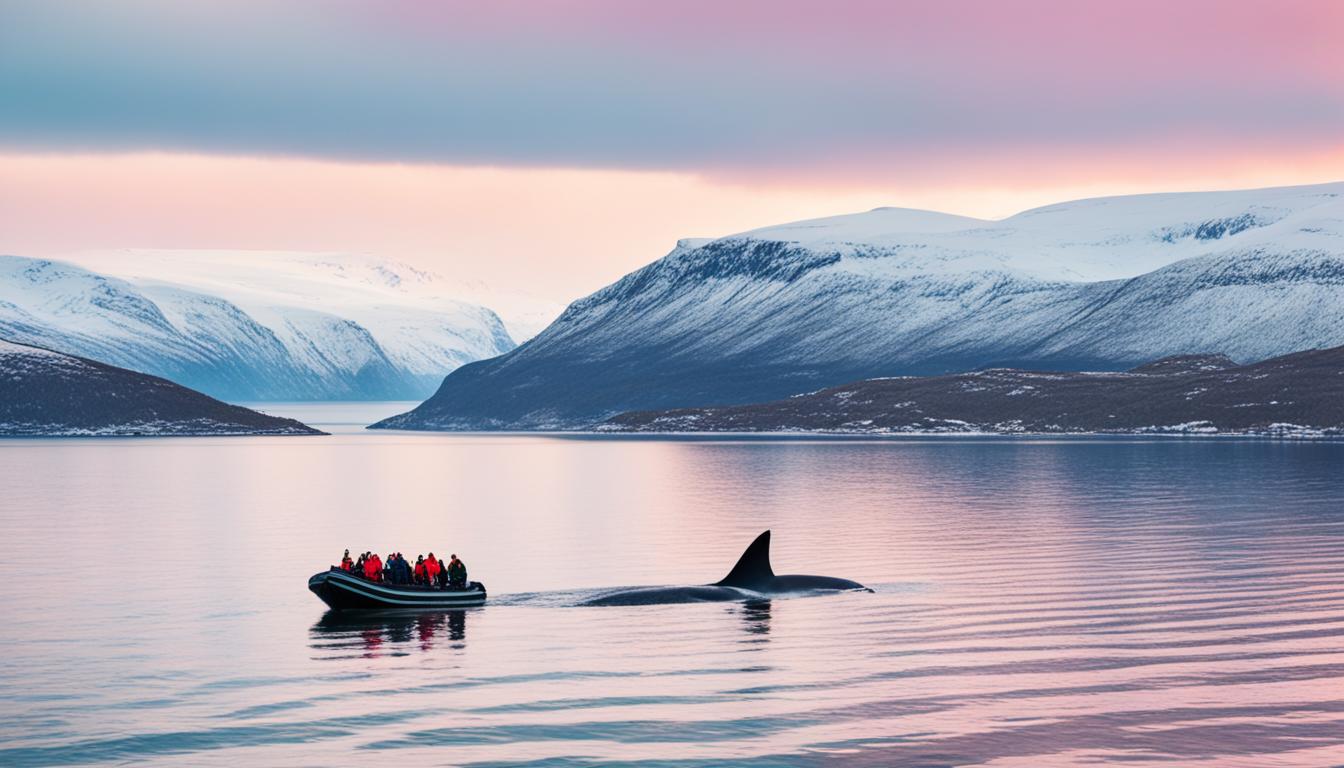
The whales are not following a calendar. They are following food. Every autumn, vast shoals of Norwegian spring-spawning herring move into the sheltered waters north of Tromsø to overwinter, and orcas and humpbacks follow them in — a migration that has shifted its address several times in living memory, moving from Tysfjord to Andfjorden and, more recently, to the fjord systems around Skjervøy. The tromso orca watching season exists because of that shoal, not because of the coastline itself. What this means in practice is that the reader is dealing with a wildlife event, not an attraction with a fixed schedule. Pods hunt cooperatively using carousel feeding, herding herring into tight balls near the surface — the behaviour that produces the dramatic surface activity most visitors have seen in photographs. Humpbacks and fin whales often work the same bait balls, and white-tailed eagles circle above them. Sea eagles overhead are, for experienced skippers, a more reliable indicator than any forecast. Because the herring's wintering grounds have relocated before, operators now range across a wide area, from the Tromsø fjords out toward Skjervøy, a two-hour drive northeast. The address that matters is a moving one. The second factor is light. This is the polar night, and the sun does not clear the horizon in Tromsø for several weeks in December and early January. That does not mean darkness — it means a long blue and pink twilight that photographers value and that peaks around midday. Boats work within it rather than against it, which is why departures cluster in the middle of the day rather than at dawn. So the practical use of all this is straightforward. Treat the season as a probability, not a promise, and build in more than one day if the trip allows. Book a Tromsø orca tour with an operator that publishes a search radius rather than a fixed route. Dress for open water in Arctic winter, not for a city walk. Watch the sea forecast, since wind, not whale numbers, cancels most winter departures. Norway's regulations keep vessels at a respectful distance, and reputable operators cut engines and drift rather than pursue. A quiet approach usually produces the longer encounter. Understood this way, the tromso orca watching season is less a date range to book than a set of conditions to read — and Arctic wildlife watching rewards visitors who arrive prepared to wait.
“The whales are not following a calendar. They are following food.”
Understanding the Tromsø Orca Watching Season
The orca watching season in Tromsø is primarily dictated by the migration of herring, which typically occurs from late autumn through mid-winter. Aligning your visit with the limited daylight hours of the polar night is essential for wildlife observation.
Late Autumn (November)
Moderate crowd levelsTemperatures around 0°C to 4°C
Herring begin to arrive in the fjords, drawing orcas into the region.
Early Winter (December - January)
Higher visitor volumeCold with temperatures -5°C to 2°C
This period offers the best probability of sightings during the peak herring migration.
Mid-Winter (February)
Lower visitor volumeColder with temperatures -7°C to 0°C
Sightings remain possible as the season begins to taper off with the return of more daylight.
Verdict: The optimal window for viewing is from November to January, specifically during the best arrival window of 08:00–14:00 to maximize visibility.
Operating Hours for the Tromsø Orca Watching Season
Tromsø whale watching activities operate daily throughout the season to accommodate visitors. You may plan your visit at any time during the day as listed below.
| Monday | 00:00–23:59 | |
|---|---|---|
| Tuesday | 00:00–23:59 | |
| Wednesday | 00:00–23:59 | |
| Thursday | 00:00–23:59 | |
| Friday | 00:00–23:59 | |
| Saturday | 00:00–23:59 | |
| Sunday | 00:00–23:59 |
Tromsø Orca Watching Season Pricing and Entry
Costs for observing orcas in the Tromsø region depend on whether you choose to view from the shore or join a guided excursion. Shore viewing is available without charge, while organized boat tours involve fees set by individual operators.
While shore viewing is 0 NOK, visitors typically pay varying rates for boat tours depending on the selected operator and included services.
Reaching Tromsø for the Orca Watching Season
Whale watching departures are primarily based in Tromsø, with many boat tours navigating to the Skjervøy area. Visitors typically reach these departure points via local bus, car, or sea transit from Tromsø city center.
Line 400 or 450 to Skjervøy
E8 and E6 highways to Skjervøy
Express boat from Prostneset, Tromsø
Preparation for the Tromsø Orca Watching Season
Orca watching in Tromsø is an open-water winter activity, so preparation focuses on securing a boat place, dressing for arctic sea conditions, and managing seasickness and cold before you board.
-
Book your boat tour weeks ahead — Winter sailings from Tromsø and Skjervøy fill early, especially around whale peak weeks.
-
Confirm details with the operator directly — Call +4777610000 or check https://www.visittromso.no/whale-watching for sailing confirmations and weather cancellations.
-
Carry photo ID and booking reference — Operators check names against passenger manifests before boarding.
-
Pack thermal base layers and wool mid-layers — Wind chill on open fjord water is far colder than the shore temperature.
-
Bring waterproof gloves, hat and neck cover — Exposed skin suffers most during long periods standing on deck.
-
Wear insulated waterproof boots with grip — Decks and quaysides ice over during the polar night.
-
Take seasickness medication one hour before — Fjord and coastal swell can be rough; tablets need time to work.
-
Declare pregnancy, back problems or heart conditions — Fast rib boats involve sustained impact that some operators restrict.
Check availability
Common questions about the tromso orca watching season
Everything you need to know about tromso orca watching season