

Quick answer
Orcas are reliably seen in northern Norway from roughly late October to late January, when overwintering herring shoals draw them into the fjords near Tromsø. Boats operate daily from 07:30, with 07:30–08:00 the recommended arrival window, because early departures are required to reach feeding grounds in daylight. There is no gate admission fee — 0 NOK entry, tour-based access only.
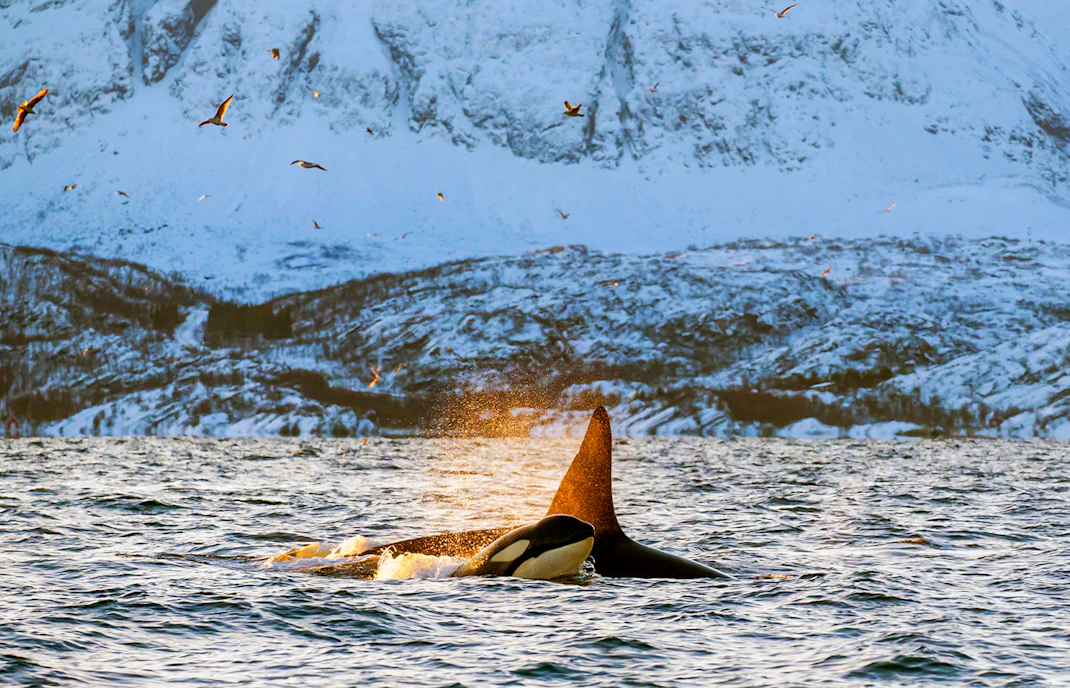
Norway's orcas are not resident showpieces. They are hunters tracking a single food source, and the entire viewing season exists because Norwegian spring-spawning herring choose to overwinter in a handful of northern fjords. When the shoals shift, so do the whales. In the 1990s the animals concentrated around Tysfjord, further south; over the past two decades the herring moved north and the orcas followed, which is why Tromsø and the waters of Kvænangen, Skjervøy and Lyngen became the reference points they are today. Anyone researching when to see orcas in norway is really researching the movement of fish. That dependency explains the shape of the season. Late autumn into midwinter is the productive stretch, and it overlaps almost exactly with the darkest part of the Arctic year. Above the Arctic circle the sun sits below the horizon for weeks around the solstice, leaving a long blue twilight rather than true daylight. Boats therefore leave early and return before the light collapses. Humpback whales often feed alongside the orca pods on the same herring, and white-tailed eagles work the surface behind them, so a single trip frequently produces more than one species. Summer, by contrast, offers midnight sun and long sailing days but no herring aggregation — visitors in August 2026 will find the fjords quiet of orcas and should plan a return in the cold months rather than expect a sighting now. A hvalsafari i Tromsø in July is a different product entirely. The practical consequences are worth understanding before booking anything. Departures from Kaigata 6, 9008 Tromsø leave from the harbour front, and the operating day begins at 07:30 across the week; the recommended arrival window of 07:30–08:00 exists because vessels need every usable hour of light to reach the feeding grounds and return. Sightings are never guaranteed — these are wild cetaceans in open water, and weather, sea state and the herring's own movements all intervene. Silent electric or hybrid vessels and RIB boats are common, and Norwegian regulations govern how close any craft may approach a pod. Whale-watching in Tromsø is a tour-based activity rather than a ticketed site, so there is no turnstile, no entrance fee and nothing to walk into unbooked. The genuine constraint is capacity in the peak weeks, not admission. For planning purposes, treat the question of when to see orcas in norway as two decisions rather than one. The first is the month, which should be chosen against the herring season and the level of darkness a traveller is willing to accept. The second is the departure, which is fixed early by daylight and by the distance to the fjords. Travellers who want the widest choice of dates tend to look at the shoulder edges of the season; those who want the highest density of animals accept midwinter twilight. Either way, verify current conditions directly on +4793086108 or at https://www.visittromso.no before committing to travel, and use this site's booking pages to check which departures still have space for the winter ahead.
“Anyone researching when to see orcas in Norway is really researching the movement of fish.”
When To See Orcas In Norway: Seasonal and Daily Windows
The prime window to observe orcas near Tromsø occurs from November to January, when herring migrations draw large pods into the coastal fjords. Daily excursions require early departures to capitalize on the limited arctic daylight available during these winter months.
November to January
High demand during herring migrationCold, temperatures typically -5°C to 2°C
This period offers the highest probability of sighting orcas following bait balls. Early morning departures are essential to reach feeding grounds while visibility remains high.
February to March
Moderate demand as migration concludesVery cold, temperatures often below -5°C
Sightings become less predictable as orcas move offshore. Daylight hours remain short, necessitating timely vessel departures.
Early morning
Peak visitor volume for departures—
Following the recommended best arrival window of 07:30–08:00 ensures vessels depart promptly to maximize time at sea. This schedule is necessary to utilize the few hours of arctic daylight.
Verdict: The best opportunity to see orcas is from November to January, arriving for the 07:30–08:00 window to ensure a timely departure.
Daily Departure Windows When To See Orcas In Norway
Our operations center is open daily to facilitate whale watching departures from Tromsø. We recommend an arrival window of 07:30–08:00 to ensure timely vessel departures.
| Monday | 07:30–17:30 | |
|---|---|---|
| Tuesday | 07:30–17:30 | |
| Wednesday | 07:30–17:30 | |
| Thursday | 07:30–17:30 | |
| Friday | 07:30–17:30 | |
| Saturday | 07:30–17:30 | |
| Sunday | 07:30–17:30 |
Admission Fees For When To See Orcas In Norway
There is no gate admission fee to access the whale watching facility. All costs associated with viewing orcas in Norway relate exclusively to the tour operations booked for the excursion.
The base admission fee for the facility is 0 NOK, with total costs depending entirely on the specific tour provider selected.
Logistics On When To See Orcas In Norway: Finding The Meeting Point
The meeting point for whale watching tours is located at Kaigata 6, 9008 Tromsø, situated in the harbor area near the city center. Visitors arriving by foot or local transport will find the departure point centrally positioned along the waterfront.
Walk from Tromsø city center toward the harbor docks
Take local bus lines to the Prostneset terminal
Request transport to Kaigata 6
Preparation Checklist For When To See Orcas In Norway
Winter boat trips out of Tromsø expose you to wind chill, spray and hours of standing still on deck, so gear is the one thing worth sorting before you arrive.
-
Pack a thermal base layer — Merino or synthetic wicks sweat away from skin during long deck watches.
-
Add a mid insulating layer — Fleece or down traps warmth between base layer and shell.
-
Bring a waterproof windproof outer shell — Sea spray and wind chill matter more than air temperature.
-
Wear insulated waterproof boots — Decks stay wet and cold underfoot for the whole trip.
-
Carry hat, gloves and neck gaiter — Exposed extremities lose heat fastest on a moving boat.
-
Test camera batteries in cold — Battery life drops sharply below freezing, so keep spares inside your jacket.
-
Charge everything the night before — Arrive at Kaigata 6 by 07:30–08:00 with devices ready, not charging.
-
Skip cotton and thin fashion coats — Cotton holds moisture and stops insulating once damp.
Check availability
Common Questions on When to See Orcas in Norway
Everything you need to know about when to see orcas in norway